
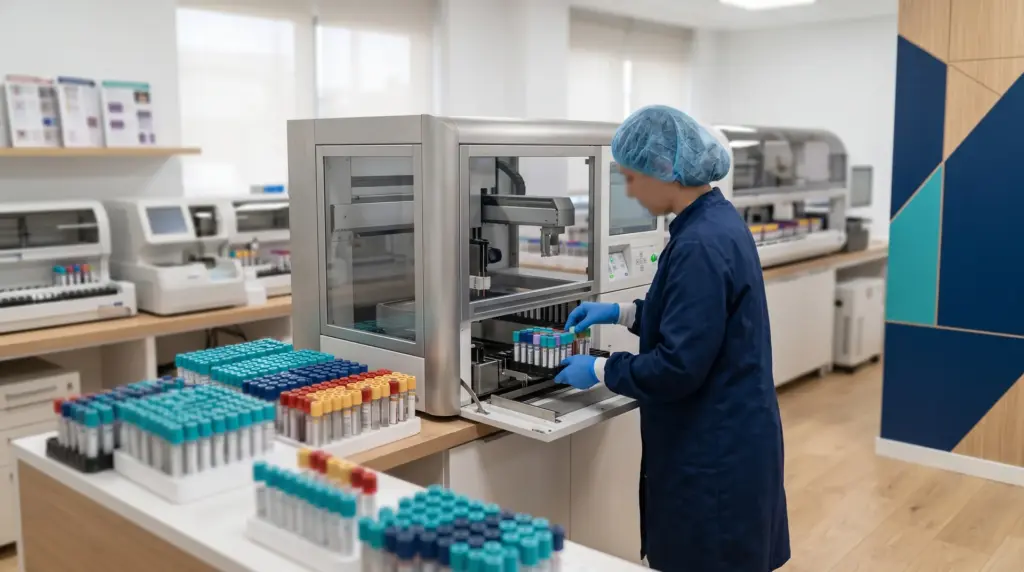
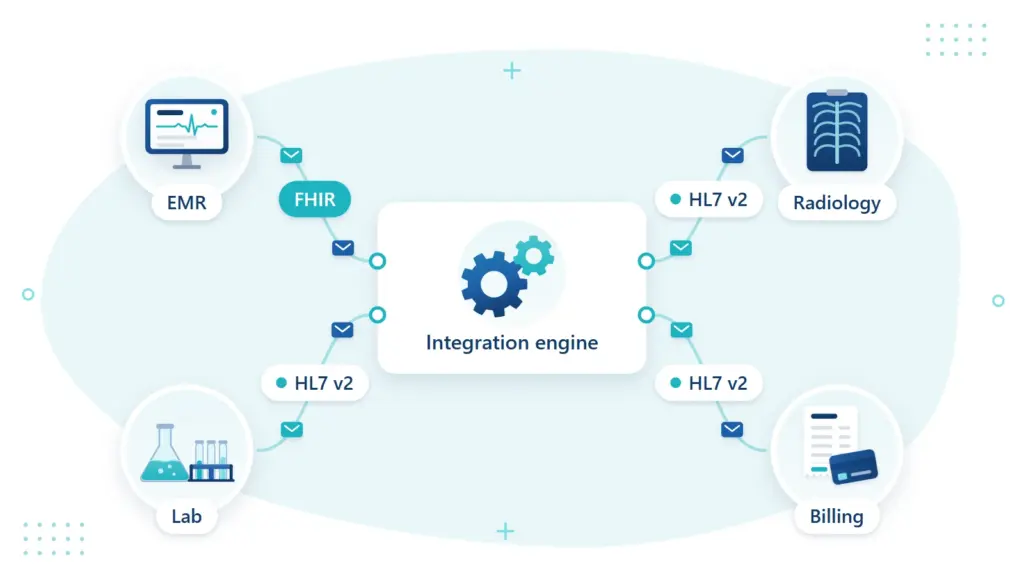
Hospitals and clinics use many systems. The EMR, the lab system, radiology, and billing each hold part of the patient record. When these systems do not talk to each other, staff type the same data twice. Mistakes and delays follow.
We build and fix the interfaces that connect these systems. We work with HL7 v2, the message standard that most hospital systems use today. We also work with FHIR R4, the modern web standard for health data.
We build on integration engines: Open Integration Engine (OIE) and Mirth Connect. For security checks, migrations and plugins, see Mirth & OIE.
What you get
- New interfaces for patient admissions and transfers (ADT), orders, lab results, radiology reports, and billing.
- Hospital and dental system links. We connect hospital systems with dental software in both directions: registration, appointments, charges, notes, and results.
- HL7 v2 to FHIR conversion. We map HL7 v2 messages to FHIR R4 resources when a new app or platform needs modern APIs.
- Monitoring. Alerts for silent feeds, stuck messages, and repeated errors.
- Clear documentation: mapping sheets, test results, and a simple runbook for your team.
UAE health exchanges and Saudi NPHIES
We can build integrations with the UAE health information exchanges: Malaffi (Abu Dhabi), NABIDH (Dubai), and Riayati (Northern Emirates). We use HL7 v2.5.1 over HTTPS or MLLP.
- The common exchange messages: patient registration and updates (ADT), clinical documents (MDM), results (ORU), problem lists (PPR), and prescriptions (OMP).
- A checked rule list and automated tests, made from the exchange’s specification.
- Help to fix refused messages and data-quality problems before they become a problem with the regulator.
In Saudi Arabia, NPHIES is the national platform for health insurance. It uses FHIR R4. We can help you design the integration for eligibility, pre-authorization, and claims.
InfoGleam is independent. We are not part of these platforms or approved by them.
Connect AI tools safely
AI tools such as scribes, assistants and receptionists need data from clinic systems. We connect them safely to those systems through HL7, FHIR and APIs.
- Only what is needed. The AI tool gets only the data it needs for its job.
- Checked at the door. Data from the AI tool is checked before it reaches your clinic systems.
- A full log. Every exchange is logged, so you can see what was sent and when.
How we work
- Your message. You tell us about your systems, message types, and goals. If a call helps, we schedule a short one.
- Scope and quote. You get a fixed price per interface, or an estimate for larger work.
- Mapping. We agree, field by field, how data moves between the systems.
- Build and test. We build each channel and test it with your sample messages in a test environment.
- Go live. We switch on the interface together and watch it closely in the first days.
- Support. An optional monthly plan keeps your interfaces healthy.
Typical projects
- Connect a new lab system to the hospital EMR: orders go out, results come back.
- Send ADT messages from the HIS to a radiology or PACS system.
- Link a hospital system with a dental system, in both directions.
- Add a FHIR API on top of an older HL7 v2 system.
- Send clinic data to a UAE health exchange.
- Connect an AI scribe or assistant to a clinic system.
Your data stays with you
Patient data stays on your systems. We work through your secure remote access. We use test data whenever we can. We follow HIPAA-style privacy practices: the least access needed, no copies on personal devices, and a clean handover at the end.
See our open-source demos and example prices on the Pricing page. Need a security check or a move from Mirth to OIE? See Mirth & OIE.
Request a quote
Tell us which systems you want to connect. We usually reply within one business day with the next steps.